
EMF meters and detectors – our recommendation 2023
Electromagnetic fields (EMFs) are all around us, generated by various electrical devices and wireless technologies. To assess and understand the EMF levels in your environment, you need an EMF meter. In this guide, we’ll explore what EMF meters are, provide recommendations on some of the best-selling models, and highlight the most cost-effective options.
What Are EMF Meters?
EMF meters, short for Electromagnetic Field meters, are specialized devices designed to measure the intensity and strength of electromagnetic fields. They are invaluable tools for individuals concerned about potential health risks associated with prolonged exposure to EMFs. These meters help you identify and quantify EMF sources in your surroundings, enabling you to make informed decisions about minimizing exposure.
Choose an EMF meter that best suits your needs - consider these factors
Type of EMF Measurement:
- Determine the specific types of electromagnetic fields you need to measure.
- Decide if you need to measure radiofrequency (RF) fields, extremely low-frequency (ELF) fields, or both.
- Check if the EMF meter you’re considering can measure both types or if it’s designed for one specific type.
Accuracy and Sensitivity:
- Look for a meter that offers accurate and sensitive measurements, as this is crucial for reliable results.
- Check the meter’s technical specifications for its sensitivity range.
Frequency Range:
- Make sure the EMF meter covers the frequency range of interest.
- For RF meters, ensure it covers the relevant frequency bands.
- For ELF meters, verify the sensitivity for the frequencies associated with your potential EMF sources.
Display and Readability:
- the size
- clarity
- whether it provides real-time measurements in a format that is easy to understand
Data Logging and Recording:
- It can be helpful for tracking EMF levels over time.
- This feature is particularly important for professionals and researchers.
Audio Feedback:
An audible signal or beep can be useful
- for quickly identifying areas with higher EMF levels
- especially when you are conducting a sweep or survey.
Multi-Axis Detection:
For measuring EMFs from all directions, providing a more comprehensive assessment of your environment.
Battery Life:
To ensure that it can handle your intended usage without frequent battery replacement or recharging.
Portability and Size:
Especially if you need to carry it with you for fieldwork or assessments in different locations.
Price and Budget:
Try to find a meter that meets your requirements without overspending. There are various options available at different price points.
User-Friendliness:
- easy to operate
- with clear instructions
- straightforward interface.
Calibration and Accuracy Certifications:
Some professional applications may require meters with proper calibration and certification. Ensure that the meter complies with relevant industry standards.
Customer Reviews:
Read customer reviews and testimonials to gauge the real-world performance and user satisfaction with the specific EMF meter you’re considering.
Warranty and Customer Support:
Check the manufacturer’s warranty and the availability of customer support in case you encounter any issues or have questions.
Safety and Regulatory Compliance:
Ensure that the EMF meter complies with relevant safety and regulatory standards in your region, especially if you plan to use it for professional or compliance purposes.
Brads and their products: EMF meters our recommendation
- Gigahertz Solutions specializes in measurement technology and protection products for electrosmog. They have been manufacturing these products in Germany since 1997.
Trifield TF2 EMF Meter: The Trifield TF2 is a versatile and user-friendly option, capable of full spectrum RF measurement. Sound option is now included. Special frequency weighting mode included for measuring electric current from EMF in the human body.
- Safe and Sound RF: New 5G Safe and Sound Classic II RF Meter by Safe Living Technologies same as
PRO II RF Meter 200MHz – 8GHz – Perfect for Measuring Cell Phones, WiFi, Smart Meters
- GQ Electronics: GQ EMF-390 Multi-Field Electromagnetic Radiation Detector: integrated testing features include three axis Electromagnetic Fields, Electric Field, Radio Frequency and Radio Spectrum Power Analyzer. The meter is able to identify the common source from EMF measured, such as Power Line, WiFi etc. It also comes with built-in audible and visual alarm. It can be used for EMF,EF, RF and 5G network detection and monitoring both indoor and outdoor(protected).
- Meterk EMF Meter: The Meterk EMF Meter is a budget-friendly option without compromising on accuracy. It’s an excellent choice for those looking for an affordable way to monitor their EMF exposure.
Gigahertz Solutions provided high-quality electrosmog meters for measuring
- high-frequency (mobile radio, WLAN, smart meters, radar, etc.) and
- low-frequency (mains current, railroad current, ‘dirty power’, etc.) electric and magnetic fields

EMF meters high-frequency
More than 5,000 satisfied customers
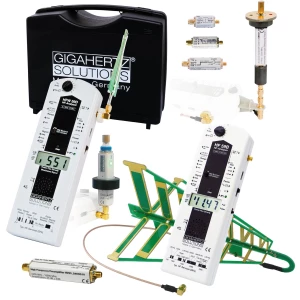
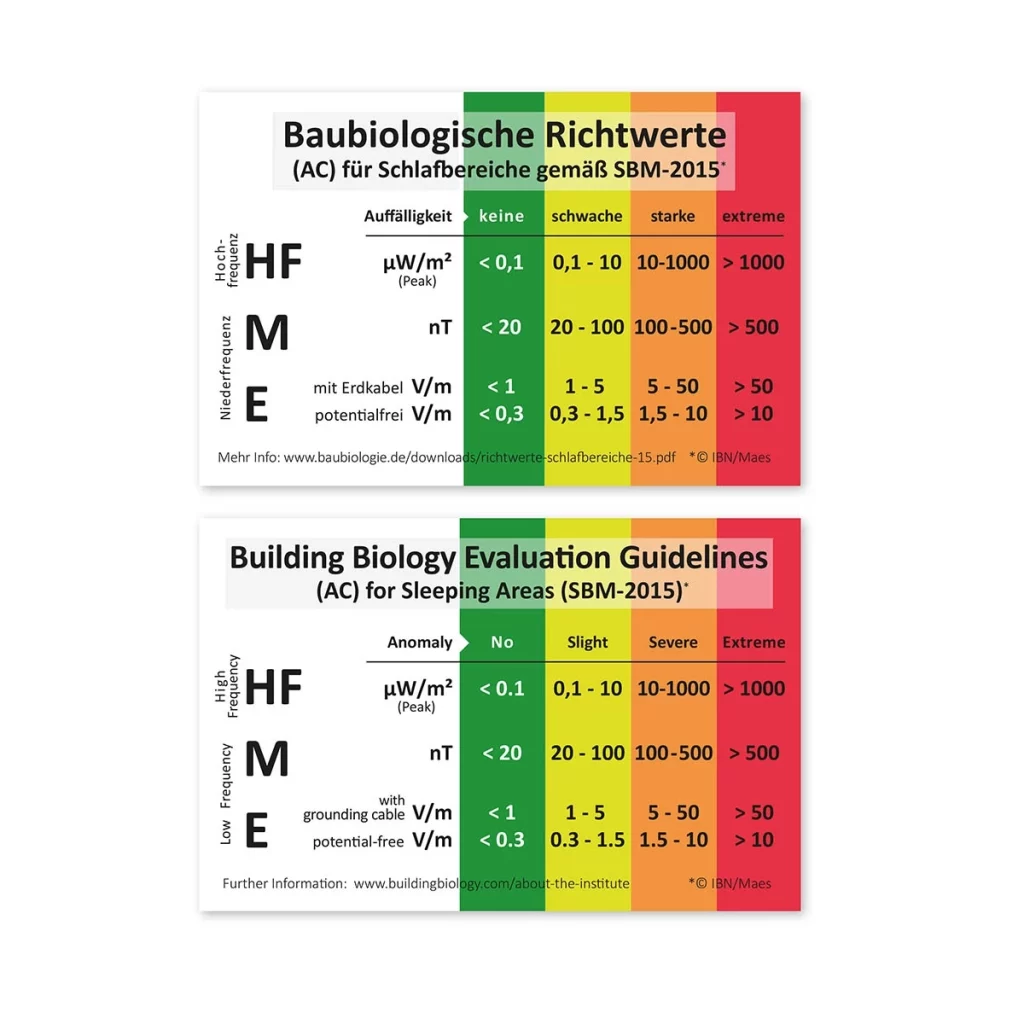
- Offers outstanding analysis possibilities for the entire high frequency range relevant to building biology.
- The equipment is functional and tailored to the building biology practice.
- Established worldwide with the building biology professional associations.
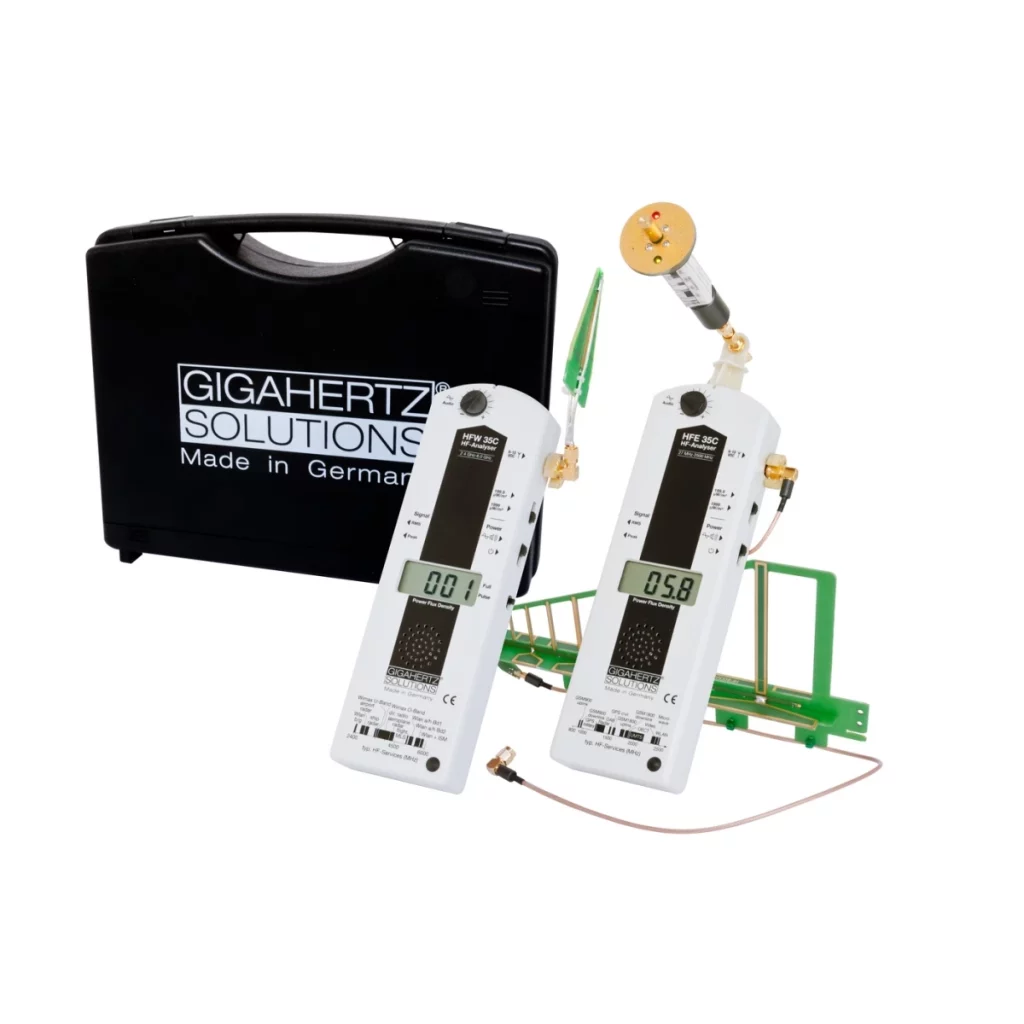
- The splitting of the extra wide frequency response into two devices has great advantages in practice, especially for the analysis of the upper frequency range.
More than 5,000 satisfied customers

EMF meters low-frequency
More than 5,000 satisfied customers
2.380,00 €
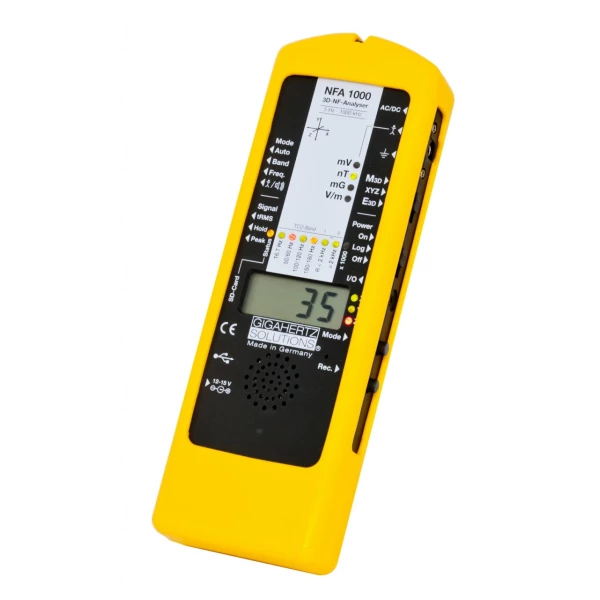


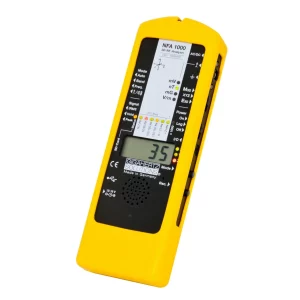
- The NFA1000 is the top of the NFA line
- The ultimate tool for dedicated building biologists
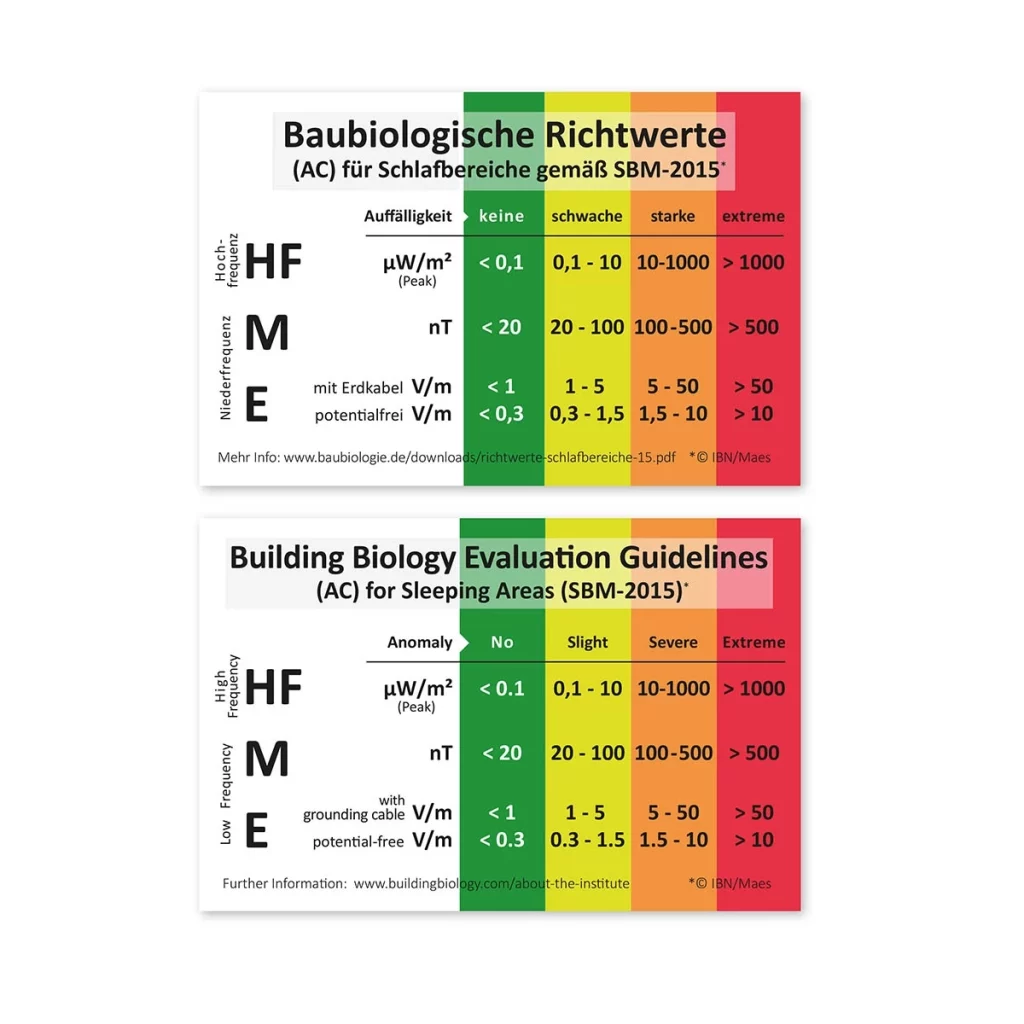
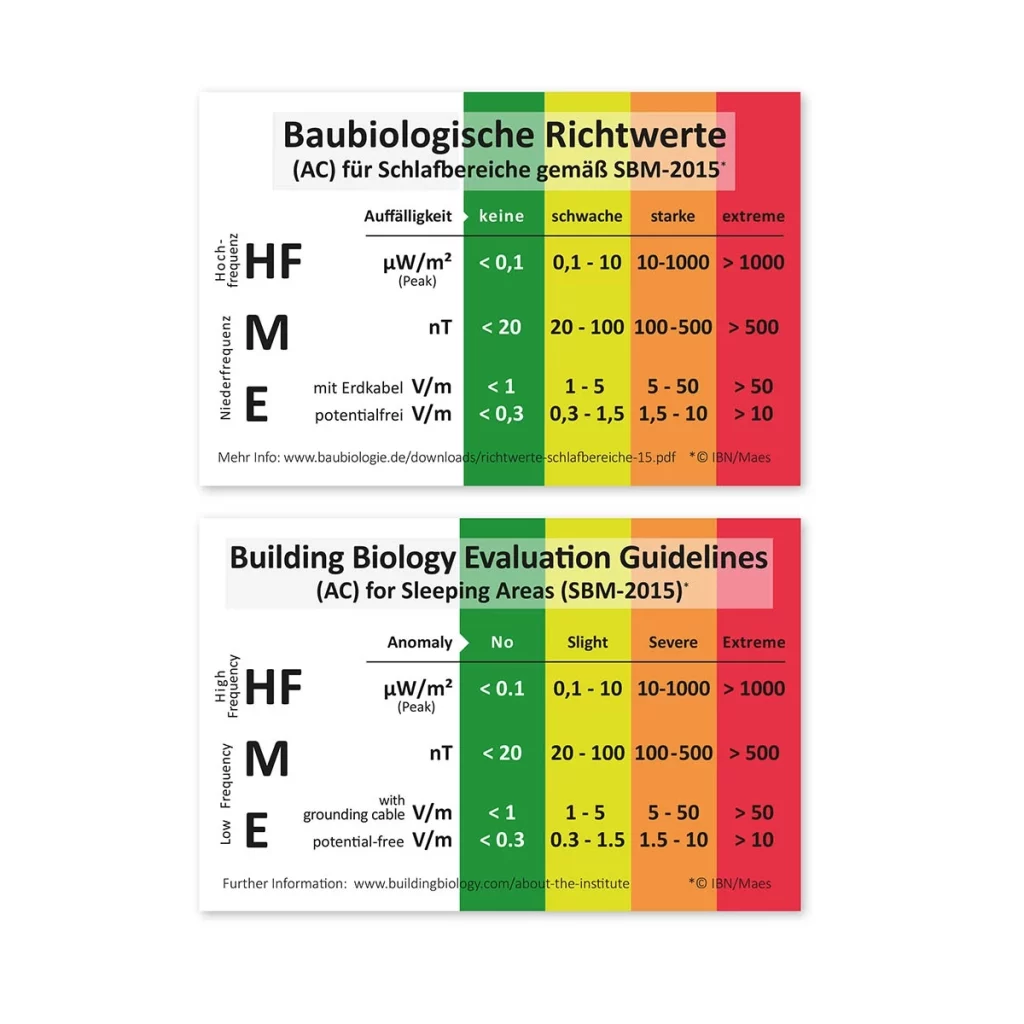
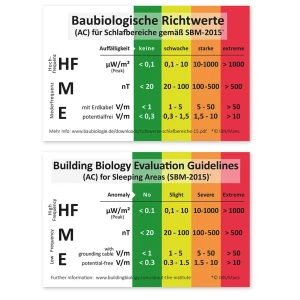
- With a fraction of the usual amount of time required, all LF sleeping area measurements can be performed compliant with the SBM regulations
- It opens up completely new insights for the mitigation of “dirty power”
- The intuitive NFAsoft evaluation software is included
| Item weight: | 1,50 kg |
| Frequency range: | 5 Hz – 1000 KHz (compensated) |
| Scope of delivery: | Measuring device with silicone holster incl. evaluation software NFAsoft |
| Measurement range: | Magnetic flux density: 1 – 19,990 nT |
| Precision: | 50 / 60 Hz: +/- 5 %
|
| Sensor: | Electric field strength, potential-free |
| Audio analysis: | Sound signal proportional to field strength (with “Geiger counter effect”, switchable) |
| Signal rating: | trueRMS, peak value, peak hold |
| Signal output ports: | AC-/DC-outputs |
| Power supply: | 7. 4-Volt Li-Ion high-capacity battery pack (included), average operating time in recording mode 36 h
|
| Garantie: | 2 years |
More than 5,000 satisfied customers
611,90 €
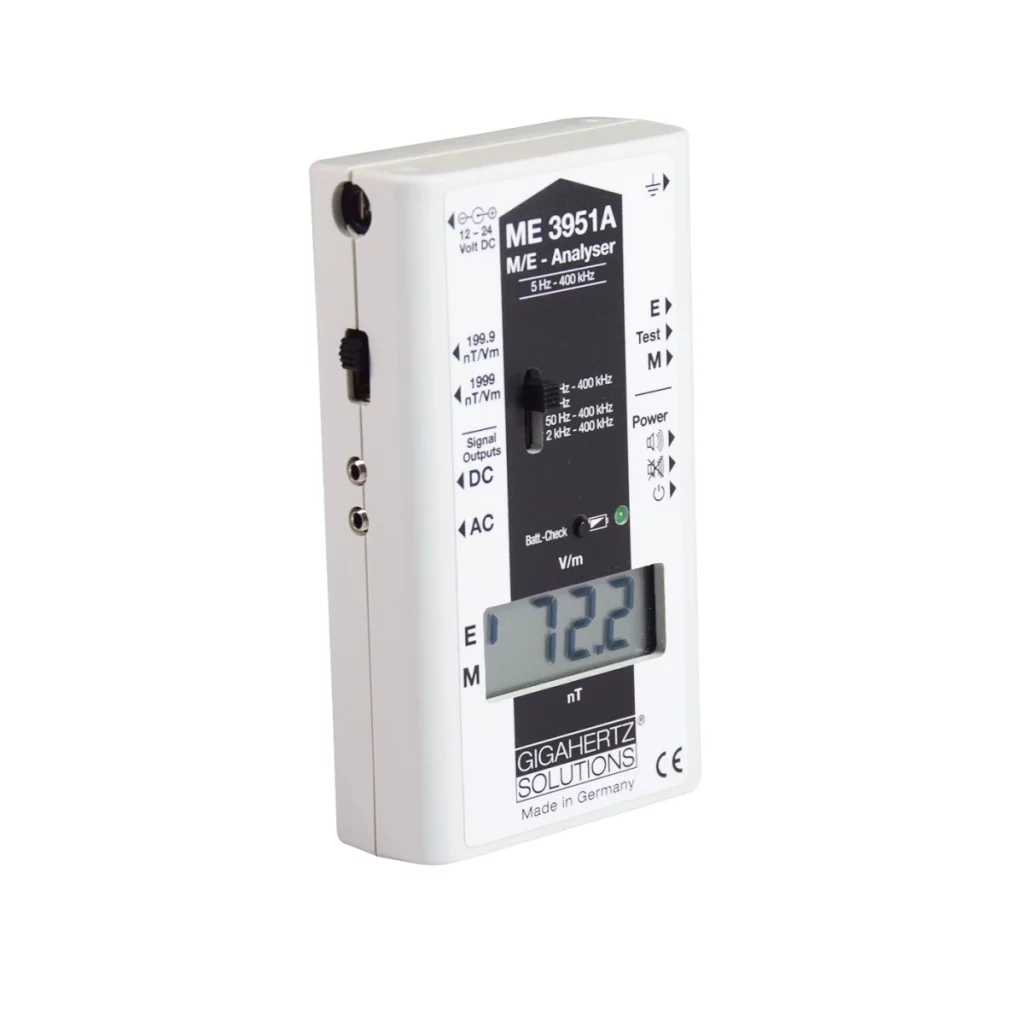
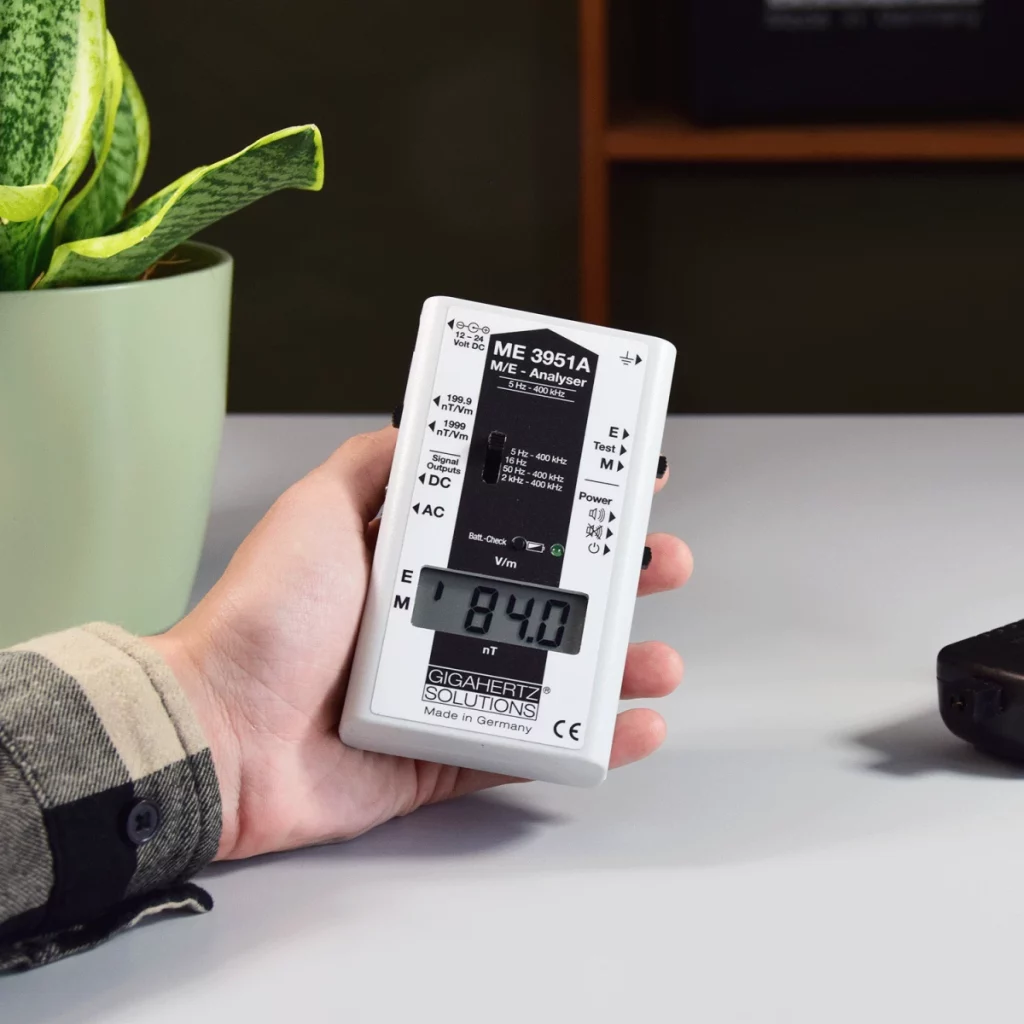
- Compact professional technology
- Covers the full TCO bandwidth
- Predestined for the professional user
- Its functions and features are tailored to the needs and practical experience of the building biology
- Due to its comparably low price, it is often also used for scientific and industrial purposes
| Item weight: | 1,10 kg |
| Frequency range: | 5 Hz – 400 KHz (compensated, better than -2 dB), better than required by the TCO directive. |
| Scope of delivery: | Measuring device |
| Measurement range: | Magnetic flux density (one-dimensional): 0.1 – 1999 nT
|
| Precision: | +/- 2 %, +/- 7 digits @ 50/60 Hz |
| Sensor: | E-field sensor for electric LF alternating fields |
| Audio analysis: | Sound signal proportional to field strength (with “Geiger counter effect”, switchable) |
| Signal rating: | RMS |
| Signal output ports: | AC/DC outputs |
| Power supply: | 9-Volt NiMH battery (included), average operating time: 8 hours |
| Garantie: | 2 years |
Checkout our partners
This site contains product affiliate links. We may receive a commission if you make a purchase after clicking on one of these links.